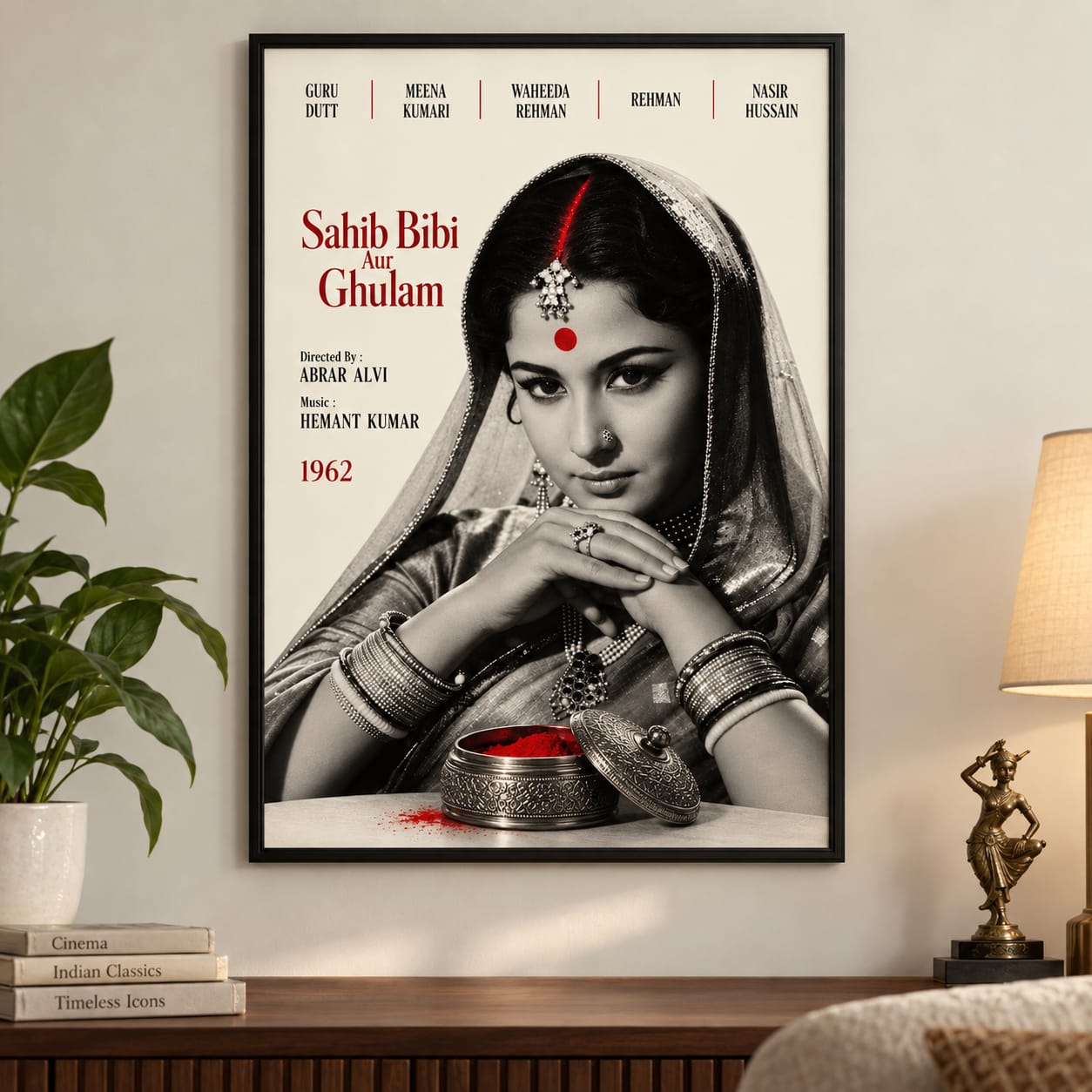
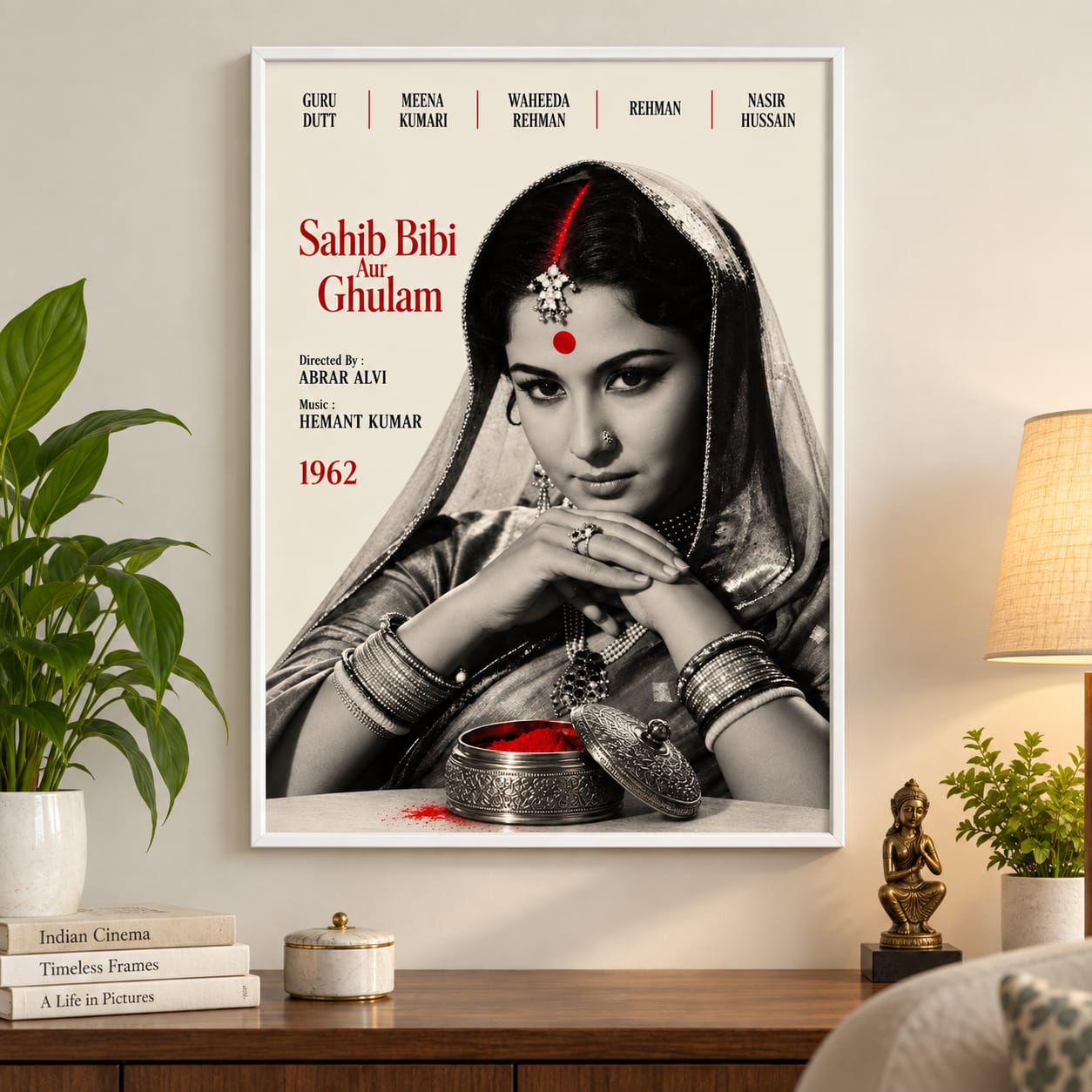
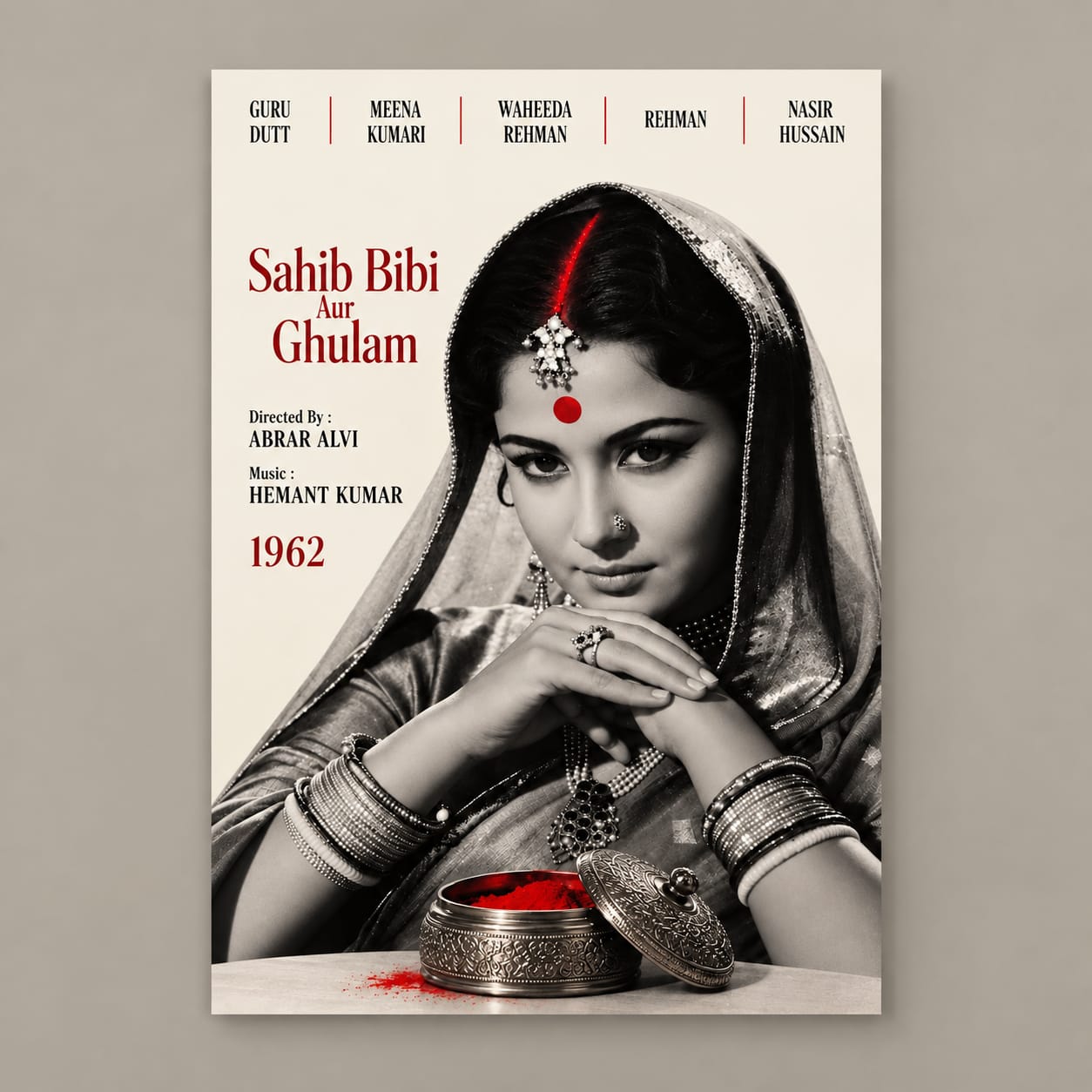
This poster places Chhoti Bahu at the centre of Sahib Bibi Aur Ghulam's most poignant symbol: Mohini Sindoor. Her portrait is kept almost entirely in black and white, while the vivid red sindoor in her hair, the red teeka on her forehead and the open sindoor daani become the only strong colour. The selective red is deliberately striking - a visual expression of hope, marriage, longing and the fragile belief that a small ritual might restore the affection she is slowly losing.
The restrained off-white field and uncluttered typography keep the attention on her face and on the ornate container of vermilion. Rather than illustrating the whole film, the artwork isolates one intimate idea from it: a neglected wife holding on to the symbols of marriage even as the world around that marriage is beginning to collapse.
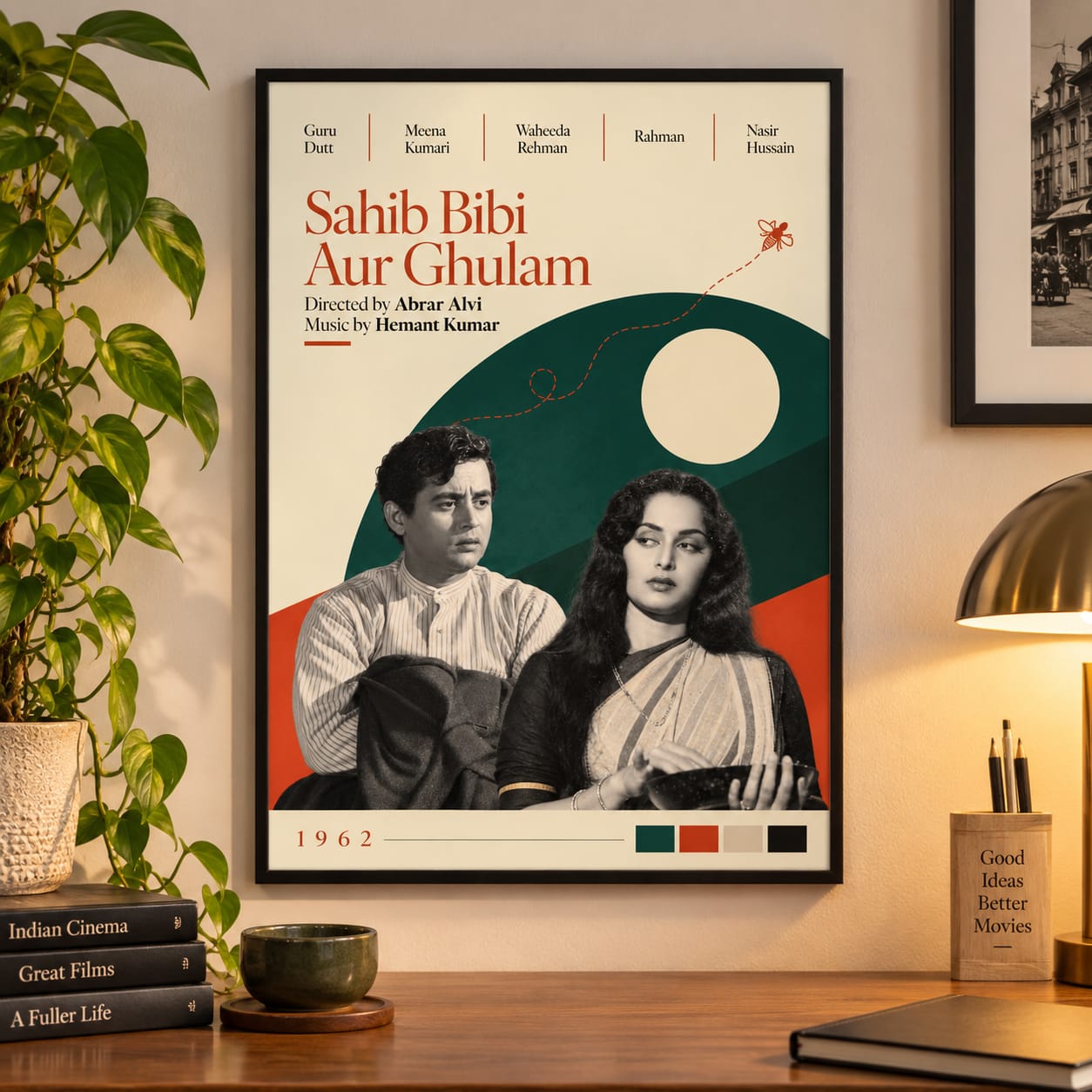
Artwork note: This is a contemporary artistic reimagining inspired by the film, not an original 1962 theatrical poster.
THE STORY BEHIND THE POSTER
Set within the fading zamindari world of colonial Calcutta, Sahib Bibi Aur Ghulam follows Bhootnath, a young villager who comes to the city in search of work and becomes connected with the Mohini Sindoor business. Through the old haveli where he lives, he encounters Chhoti Bahu, the lonely young wife of Chhote Babu. Her husband spends his nights away from home, drinking and seeking entertainment elsewhere, while she waits for a companionship that marriage has failed to give her.
Chhoti Bahu hears of Mohini Sindoor and believes that the vermilion may possess the power to bring an estranged husband back to his wife. In secrecy she asks Bhootnath to obtain it for her. The request becomes the beginning of an unusual bond: Bhootnath is not her lover, but a sympathetic confidant and witness to her private anguish. The sindoor therefore carries two meanings in the poster - Chhoti Bahu's desperate faith in the promise of marriage, and the quiet beginning of the trust she places in Bhootnath.
But no talisman can repair the deeper cruelty of her circumstances. When her attempts to win back her husband fail, she agrees to drink with him in the hope of sharing the life that repeatedly excludes her. What begins as an act of devotion becomes destructive. Her dependence on alcohol deepens as the haveli itself declines, and her personal tragedy becomes inseparable from the collapse of the feudal household that has confined her.
Customer Feedback
0 Reviews
No Reviews Yet
Have you used this product? Be the first to share your thoughts!
Have You Purchased This?
Please log in to your account to write a verified customer review.
Login to Review