A new director. A new screen persona. A new mood for Bombay cinema.
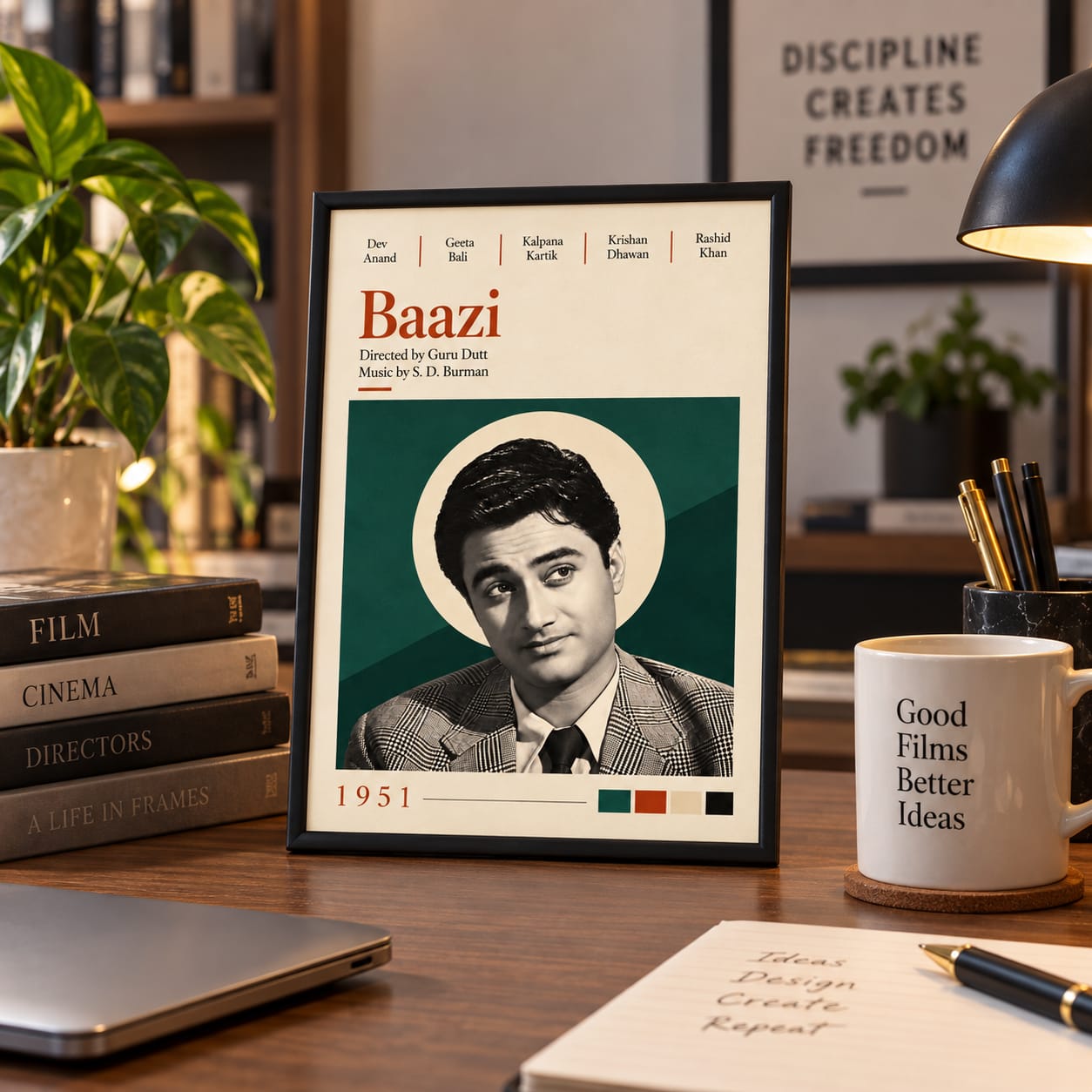
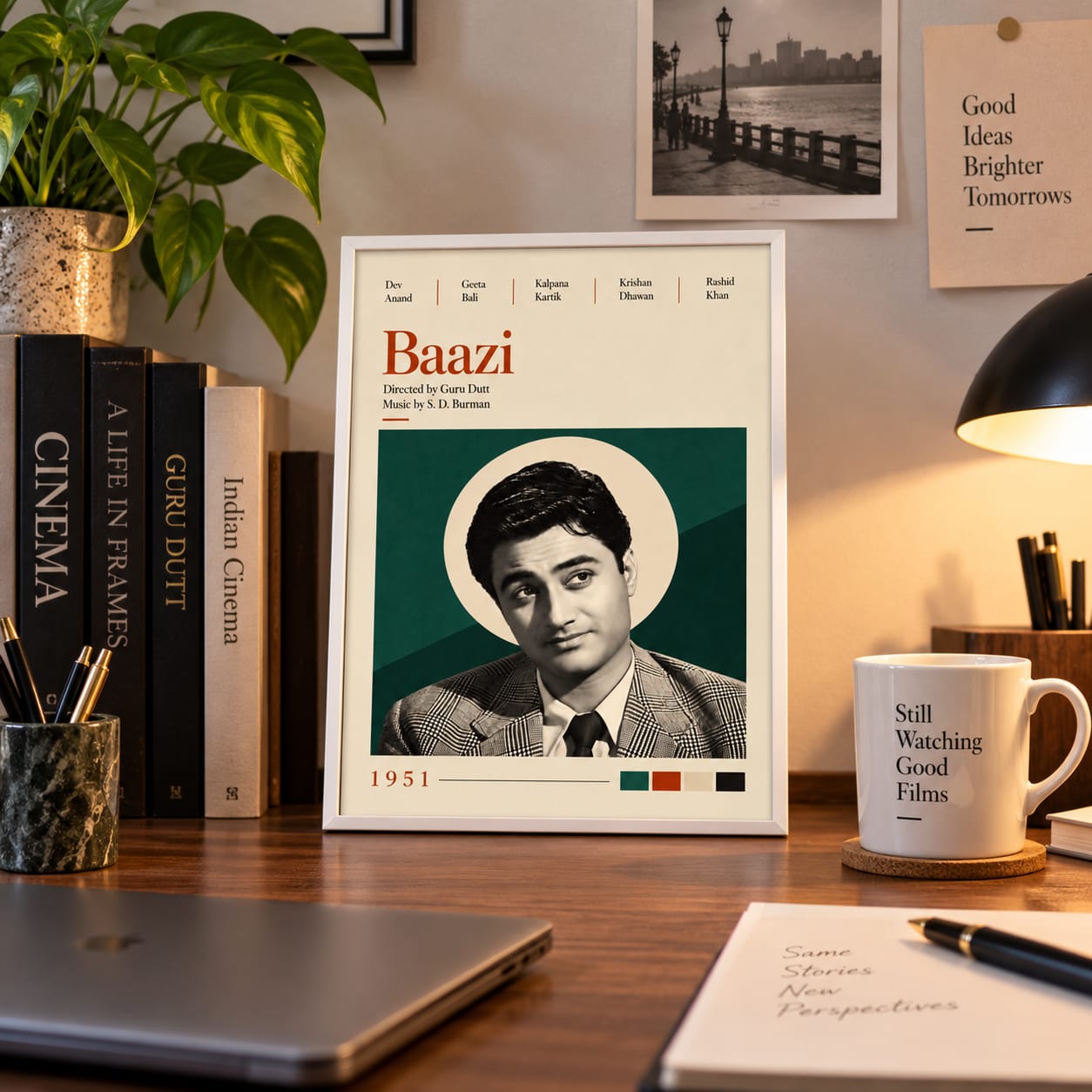
This Baazi art poster celebrates a decisive moment in Hindi cinema. Released in 1951, Baazi marked Guru Dutt’s feature-film directorial debut and helped establish a noir-inflected urban style built on nightclubs, gambling rooms, shadows, moral ambiguity and the seductive danger of the modern city.
At the centre is Madan, Dev Anand’s gambler and reluctant participant in a criminal world. The portrait presents him with the polished assurance that would become inseparable from Dev Anand’s screen image: sharp tailoring, an easy gaze and a confidence that seems to belong naturally to the city. Yet beneath that surface is a man whose choices are shaped by hardship and by concern for his ailing sister.
The poster uses that contrast as its visual idea. The checked suit, immaculate collar and composed expression suggest status and self-possession, while the deep green field and stark monochrome portrait recall the tension of noir. It asks a simple question: how quickly do we decide who a person is from the way he looks?
Madan is not introduced as a conventional hero. He is unemployed, financially strained and exceptionally gifted at gambling. When money becomes necessary for his sister’s treatment, his talent at the tables pulls him toward the shadowy world of the Star Hotel and its criminal network. The city offers him a shortcut to money, but every shortcut carries a price.
That is where Baazi becomes more than a crime story. Madan can look like a man who belongs to the glamorous world of money, clubs and expensive clothes, yet the film repeatedly complicates what appearances seem to tell us. Respectability does not automatically mean goodness, and poverty or association with the street does not erase a person’s humanity. The polished exterior and the inner moral life are not always the same thing.
This poster captures Madan at the moment when appearance becomes power. The suit changes the way the world reads him. Confidence becomes a kind of currency. In a society quick to judge by clothes, wealth and social position, the image invites us to look beyond the surface — toward the beautiful heart that may remain unseen.